
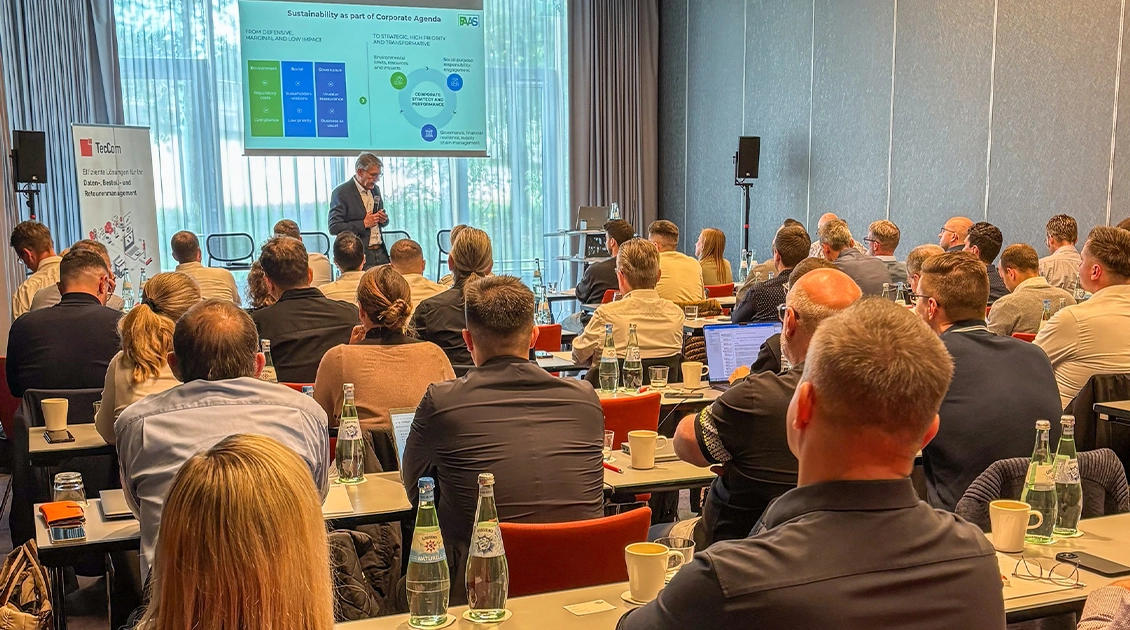
The automotive aftermarket is undergoing a major transformation — and sustainability is no longer an optional extra. It has become a central pillar of strategy, innovation, and long-term competitiveness.
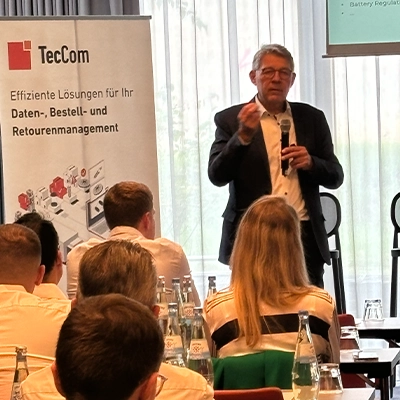
This message was at the heart of the presentation delivered by Frank Schlehuber, Member of the Board of the Forum on Automotive Aftermarket Sustainability (FAAS), during the TecCom Community Meeting DACH 2025. His talk highlighted how the aftermarket is evolving from a compliance-driven mindset to a proactive, collaborative movement shaping a more sustainable future for mobility.
From Compliance to Commitment
Traditionally, sustainability in the aftermarket was seen as a matter of regulatory compliance or cost control. But that perspective is changing. As Schlehuber outlined, the sector is shifting from a defensive and marginal approach to a strategic and transformative one, integrating sustainability into every layer of business:
- Governance: Ensuring financial resilience and supply chain transparency
- Social impact: Engaging stakeholders and fostering responsible business practices
- Environmental performance: Managing resources efficiently and respecting ecological limits
This evolution is not only about reducing impact, it’s about building stronger, more adaptable companies that can thrive in a fast-changing market.
FAAS: Uniting the Aftermarket Around a Common Goal
The Forum on Automotive Aftermarket Sustainability (FAAS), now a recognized non-profit European association, brings together more than 45 members, including suppliers, distributors, and industry associations. Their shared goal: to advance sustainability across the entire aftermarket value chain.
FAAS drives this mission through five focused Working Groups (WGs):
- Repair vs. Replace
Exploring when repairing components is more sustainable than replacing them, considering factors like mileage, energy use, and materials. A major study on this topic is expected in 2026, accompanied by educational materials for the value chain.
- Circular Economy & Remanufacturing
Remanufacturing is a cornerstone of a circular economy. According to a recent FAAS survey, more than 90% of workshops and 80% of wholesalers already use remanufactured parts, yet barriers such as limited availability and low customer awareness remain.
FAAS is working to address these gaps through clearer return criteria, stronger marketing support, and campaigns promoting the economic and environmental benefits of reman parts.
- Product Carbon Footprint (PCF)
A harmonized PCF methodology is in development, aligned with the Catena-X framework. The goal is to ensure comparability and transparency in CO₂ data across the aftermarket, helping companies measure and communicate their impact with confidence.
- Sustainable Logistics
This working group focuses on greener logistics by identifying best practices, launching supplier–distributor pilot projects, and promoting standardized, low-impact packaging solutions.
- ESG Reporting & Communication
As sustainability reporting becomes increasingly regulated — through frameworks like Corporate Sustainability Reporting Directive (CSRD), Corporate Sustainability Due Diligence Directive (CSDDD), and Packaging and Packaging Waste Regulation (PPWR) — Working Group 5 is developing tools to harmonize data requests and reporting requirements, making it easier for companies to share sustainability data efficiently and credibly.
What’s Next for the Aftermarket
FAAS continues to advance practical initiatives that will help the industry move forward, including:
- Publication of the Repair vs. Replace study and interactive scenario tool
- Best Sustainable Practices for logistics and packaging
- A Product Carbon Footprint guidance paper tailored for aftermarket companies
- The launch of a sustainability data exchange platform
- The release of the Remanufacturing Study Report to promote circular business models
More information about the activities of FAAS is available at: FAAS Forum on Automotive Aftermarket Sustainability
These developments will also be discussed during the FAAS Sustainability Day in Prague (November 26–28, 2025). This flagship event brings together aftermarket leaders to share insights on packaging, batteries, circularity, and carbon data transparency. More information about the event is available at: FAAS Sustainability Day 2025
Sustainability as a Competitive Advantage
As the automotive sector continues to evolve, sustainability has become a key differentiator for success. From remanufacturing to emissions transparency, the aftermarket has a unique opportunity to reduce its environmental footprint while increasing customer trust and operational efficiency.
By uniting stakeholders, standardizing data, and embedding circular principles, the aftermarket can drive not only greener operations — but a more resilient and profitable industry for the future.
Learn More
This presentation was part of the TecCom Community Meeting DACH 2025, where industry experts came together to share knowledge and discuss the trends shaping tomorrow’s automotive aftermarket.
Learn more about the event and explore his presentation and all the other that were held there: