Diagnostic case: When the Air Conditioning Refuses to Cool
)
A hybrid fault that hides behind a simple fault code
This workshop case was submitted to the TecRMI Verified Repairs helpdesk (part of TecAlliance). The issue was raised by an independent workshop that had reached a diagnostic dead end. Together with their expert technicians, the fault was analysed, resolved, and subsequently validated. The repair has since been added to the TecRMI Verified Repairs database of known and verified real-world issues.
The CUPRA Formentor e-Hybrid arrived with a complaint that sounded familiar: “The air conditioning no longer cools.” No cold air, no matter the setting or outside temperature. For a modern plug-in hybrid, that’s uncomfortable — but not unusual.
A quick diagnostic scan seemed to confirm a straightforward cause. In both the hybrid battery management unit and the electric drive control unit, the same fault code was stored:
P139C00 – Coolant Level Sensor 2: low coolant level
At first glance, the message was clear. Low coolant in the high-voltage battery cooling circuit. But as so often with hybrids, the first answer turned out not to be the right one.
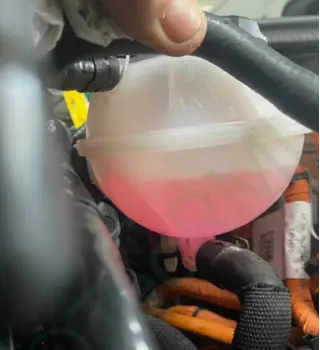
A level that’s low — but why?
A visual inspection showed that the coolant level in the expansion tank of the high-voltage battery cooling circuit was indeed below the minimum mark. No warning lights were active, and there were no visible leaks under the vehicle. The underbody was dry, the hoses looked intact.
Topping up would have been easy. But coolant doesn’t disappear without a reason — especially not in a sealed battery cooling system.
The technician decided to look a little closer before refilling anything.
Pressure tells a different story
With the vehicle cooled down, the expansion tank cap was carefully opened. What stood out immediately was excessive internal pressure in the high-voltage battery cooling circuit.
That didn’t fit the picture.
Battery cooling systems operate under pressure, but not enough to force coolant out. Excess pressure usually points to heat buildup — or pressure entering the system from somewhere else.
And in a plug-in hybrid, there’s one system nearby that works with significantly higher pressures: the air conditioning circuit.
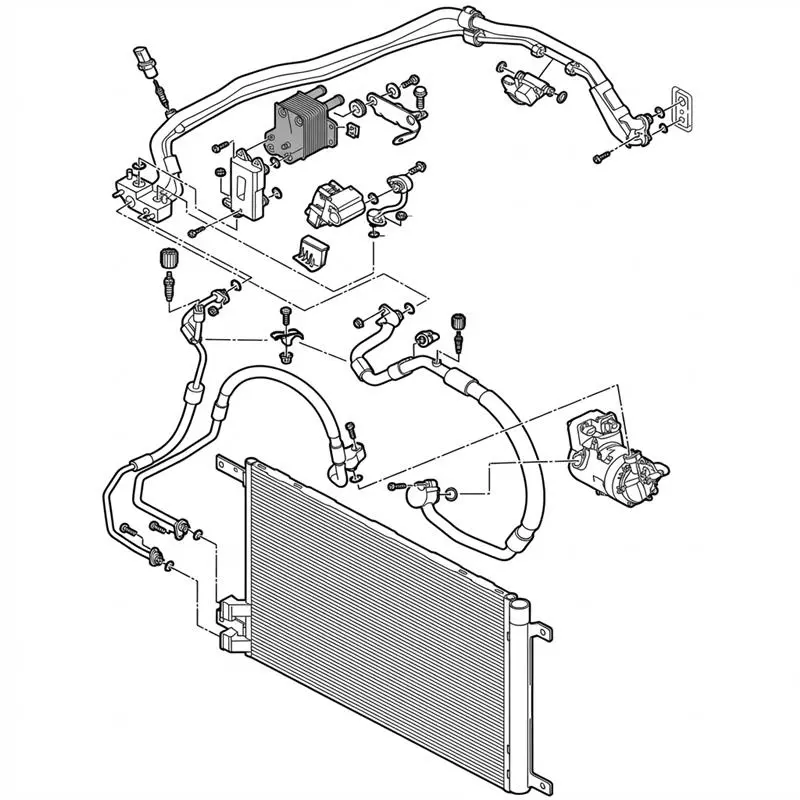
Two systems, one shared component
In the Formentor e-Hybrid, the high-voltage battery heat exchanger is integrated into the air conditioning system. Its job is to transfer heat between the battery coolant and the refrigerant — without allowing the two media to mix.
If that separation fails internally, the consequences can be far-reaching.
A closer inspection of the heat exchanger didn’t reveal obvious external damage. No cracks, no visible leaks. But the pressure behaviour still didn’t make sense.
At the same time, a check of the climate control system showed something else: the refrigerant level was too low. That explained the lack of cabin cooling — but not where the refrigerant had gone.
When symptoms start to connect
Now the pieces began to align.
The excessive pressure in the battery cooling circuit explained the coolant loss through the expansion tank cap. The low refrigerant explained the lack of cooling. Both pointed back to the same component.
Further inspection revealed the decisive clue: the high-voltage battery heat exchanger showed signs of freezing.
That should never happen under normal conditions.
An internal leak with external consequences
The diagnosis was clear. An internal leak inside the high-voltage battery heat exchanger allowed refrigerant and battery coolant to mix.
As refrigerant pressure entered the battery cooling circuit, pressure rose beyond its design limits. Coolant was pushed out through the pressure relief valve in the expansion tank cap, triggering the low-level fault code.
At the same time, refrigerant escaped from the climate control circuit, preventing the system from cooling the cabin. In some cases, the pressure imbalance caused the heat exchanger to freeze internally, worsening the problem even further.
Electronically, the system only reported a low coolant level.
Mechanically, two systems were failing at once.
Why this fault is easy to misread
This is where many hybrid faults become expensive. The fault code points towards a sensor or a simple coolant loss. The symptom feels like an air conditioning issue. Treated separately, both systems could be refilled — temporarily masking the real problem.
But the underlying failure would remain, pressure would build again, and the customer would return with the same complaint.
Only by understanding how tightly thermal systems are linked in modern hybrids does the real cause come into view.
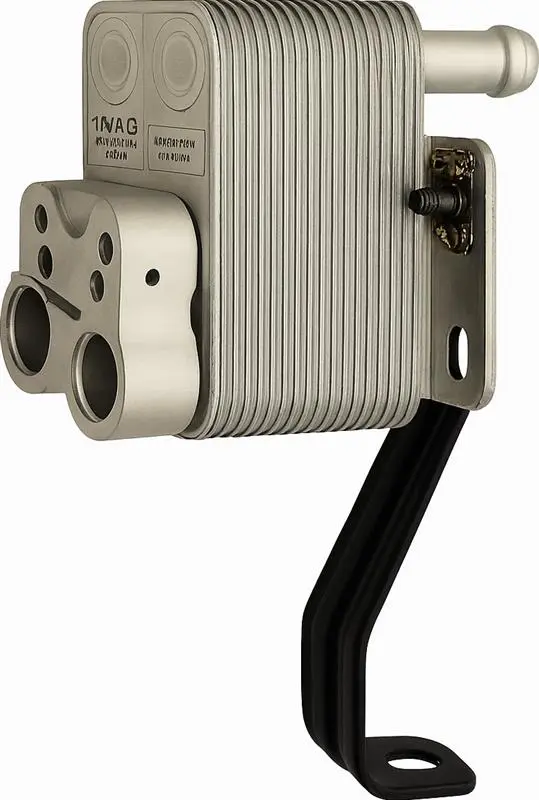
The correct repair — and nothing less
There’s no shortcut for an internal leak.
To resolve the fault properly, the following steps were necessary:
• Replacement of the high-voltage battery heat exchanger
• Restoration of the correct coolant level in the battery cooling circuit
• Replacement of the refrigerant in the climate control system
• Installation of a new seal on the expansion tank cap
• Clearing all stored faults in the affected control units
After the repair, pressure levels normalised. Coolant loss stopped. The climate system cooled as intended, even under load.
The fault code did not return.
What this case reminds us
This Formentor highlights a lesson that applies to many modern hybrids:
• Fault codes don’t always identify the failed component
• Pressure behaviour can be more revealing than live data alone
• Coolant loss without visible leaks deserves extra suspicion
• Shared thermal components can cause symptoms in multiple systems
Most importantly, it shows how a single internal failure can create misleading symptoms — and how easy it is to follow the wrong trail if you trust the fault memory too quickly.
Sometimes, the real problem isn’t where the system tells you to look. It’s hiding exactly between two systems that were never meant to meet.
Contact us!